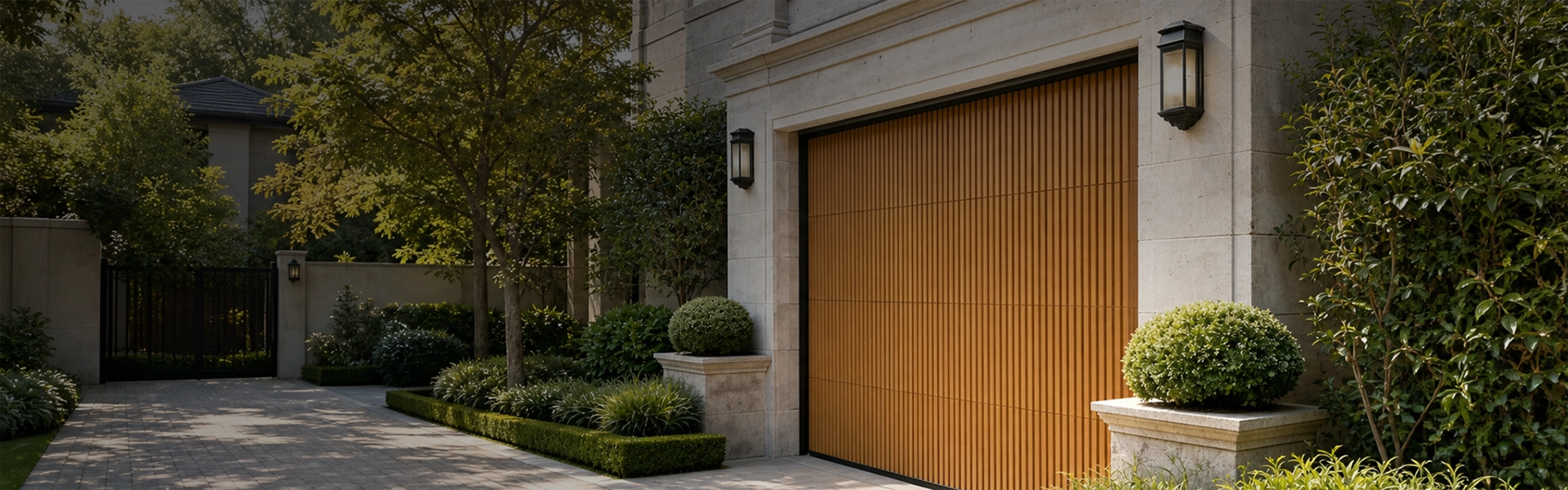
A warehouse door that opens twenty times a day does not have the same operating requirement as a logistics entrance handling continuous forklift traffic.
Opening frequency is therefore one of the first factors to consider when comparing an industrial sectional door with a rigid high speed door.
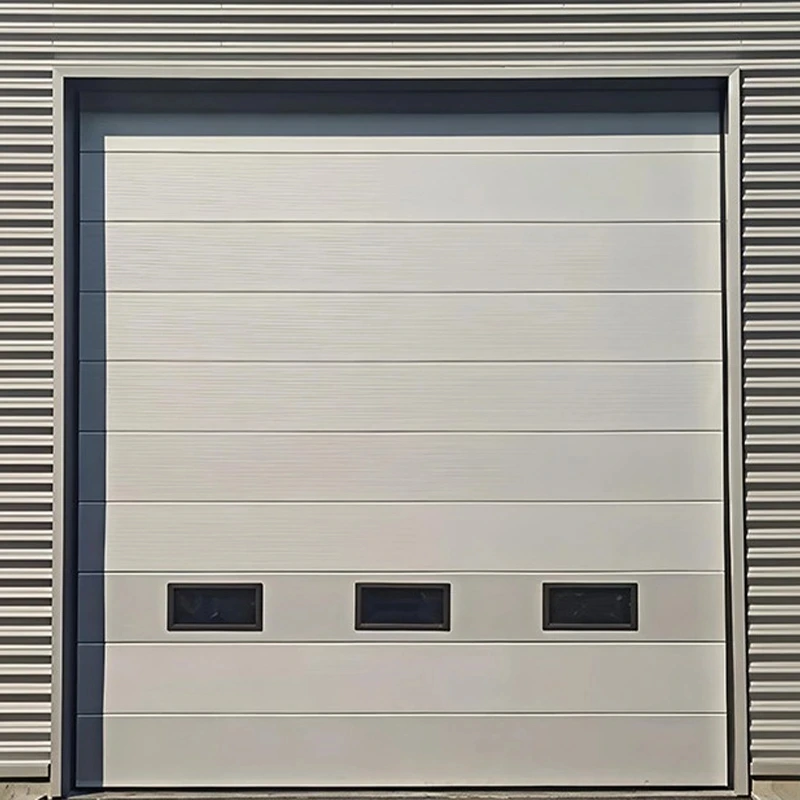
An industrial sectional door uses connected insulated panels that travel vertically and then follow the selected track arrangement.
It is widely used for warehouses, factories, loading areas and other industrial openings where insulation, security and reliable daily operation are important.
A rigid high speed door is designed for faster operating cycles.
Depending on the structure, rigid slats or panels travel through a high-speed track system, making this type of door suitable for entrances where reducing waiting time is important.
The main decision is not simply speed.
For lower or moderate traffic frequency, an industrial sectional door may already provide the required performance while offering good insulation and straightforward operation.
For entrances with frequent vehicle movement, reducing every opening cycle can improve traffic flow and limit the time the opening remains exposed.
Other factors include:
Insulation: Both products can offer insulated structures, but the required thermal performance should be confirmed for the specific configuration.
Opening frequency: Frequent cycles generally favour a high speed system.
Wind conditions: Door size, installation location and local wind conditions should be considered for either product.
Maintenance: A higher operating frequency also means that inspection and maintenance planning becomes more important.
Budget: Higher operating speed and more complex drive systems normally affect the overall system cost.
The final selection should be based on how the opening is actually used rather than on product appearance alone.
Huadun can review opening dimensions, traffic frequency and site conditions before recommending a suitable configuration.
Custom Manufacturing, Project Support, and Global Export Experience
Maji Industrial Park, Jining Economic Development Zone, Shandong Province, China
Whatsapp : +8618853718958
Email : [email protected]


Copyright © 2026 by Shandong Jining Huadun Door Industry Co., Ltd. All Rights Reserved