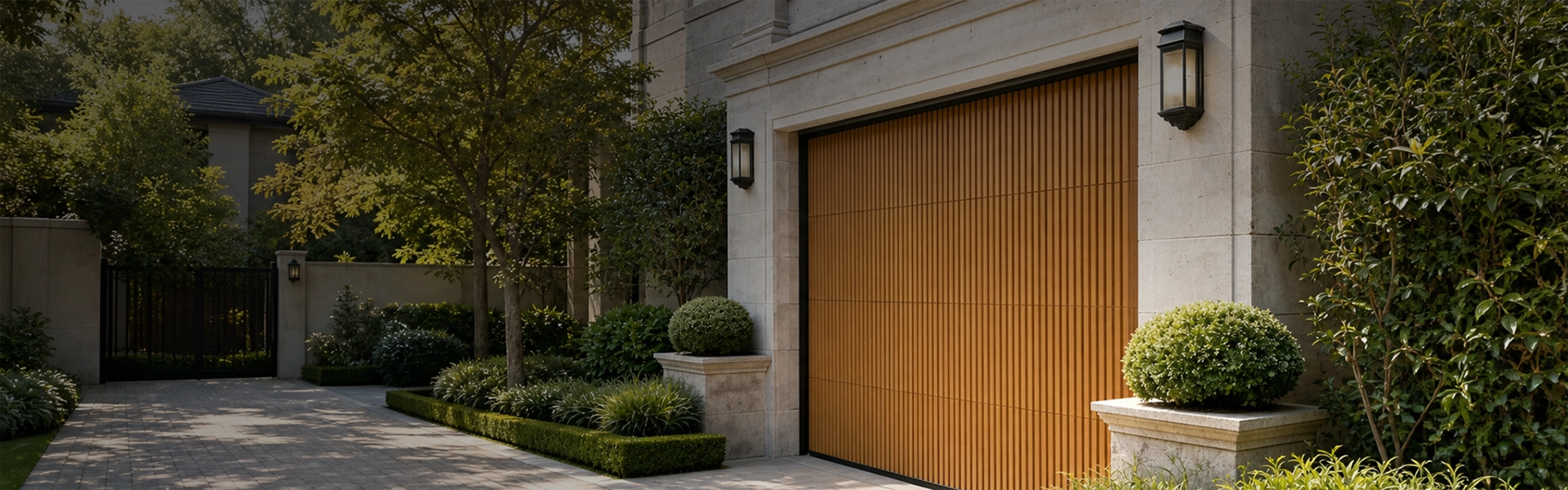
A warehouse manager may barely notice a smoke barrier hanging below the roof. Put the same permanent curtain across a bright hotel atrium, however, and the building owner may ask for a different solution. That contrast explains why a fixed smoke curtain and an automatic smoke curtain can both be technically appropriate, yet only one may suit the building.
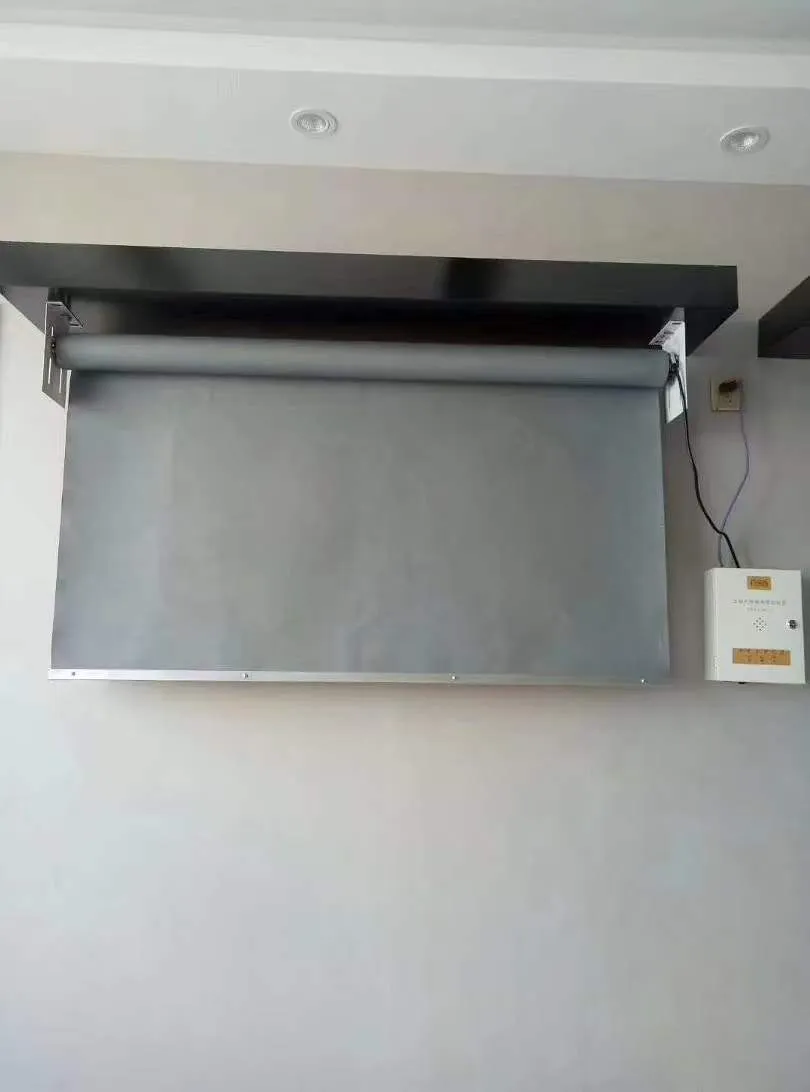
The distinction is not about which product is 'better' in general. It is about the space, the required smoke-control arrangement and what must happen during normal use. A fixed curtain remains in place. An automatic curtain is stored above the opening and deploys when instructed by the building's control system.
First decide whether the barrier can remain visible
In a workshop or a distribution warehouse, a permanently hanging barrier may be straightforward to accommodate. The roof is high, the smoke-control zones are planned around the structure, and the fabric does not interfere with ordinary operations. A fixed curtain may provide the required boundary with relatively few mechanical components.
A shopping mall is a different case. A permanent curtain across an open floor or overlooking a retail atrium can interrupt sightlines, tenant signage and the appearance of the space. An automatic curtain allows the same area to remain visually open during normal business hours. It lowers to a designated position only when the relevant fire or smoke-control signal is received.
This is often the first decision to make with the architect and fire engineer. If a permanent drop is acceptable, there may be little reason to introduce motorized equipment. If the opening must stay clear, a retractable system deserves consideration.
What changes in the installation?
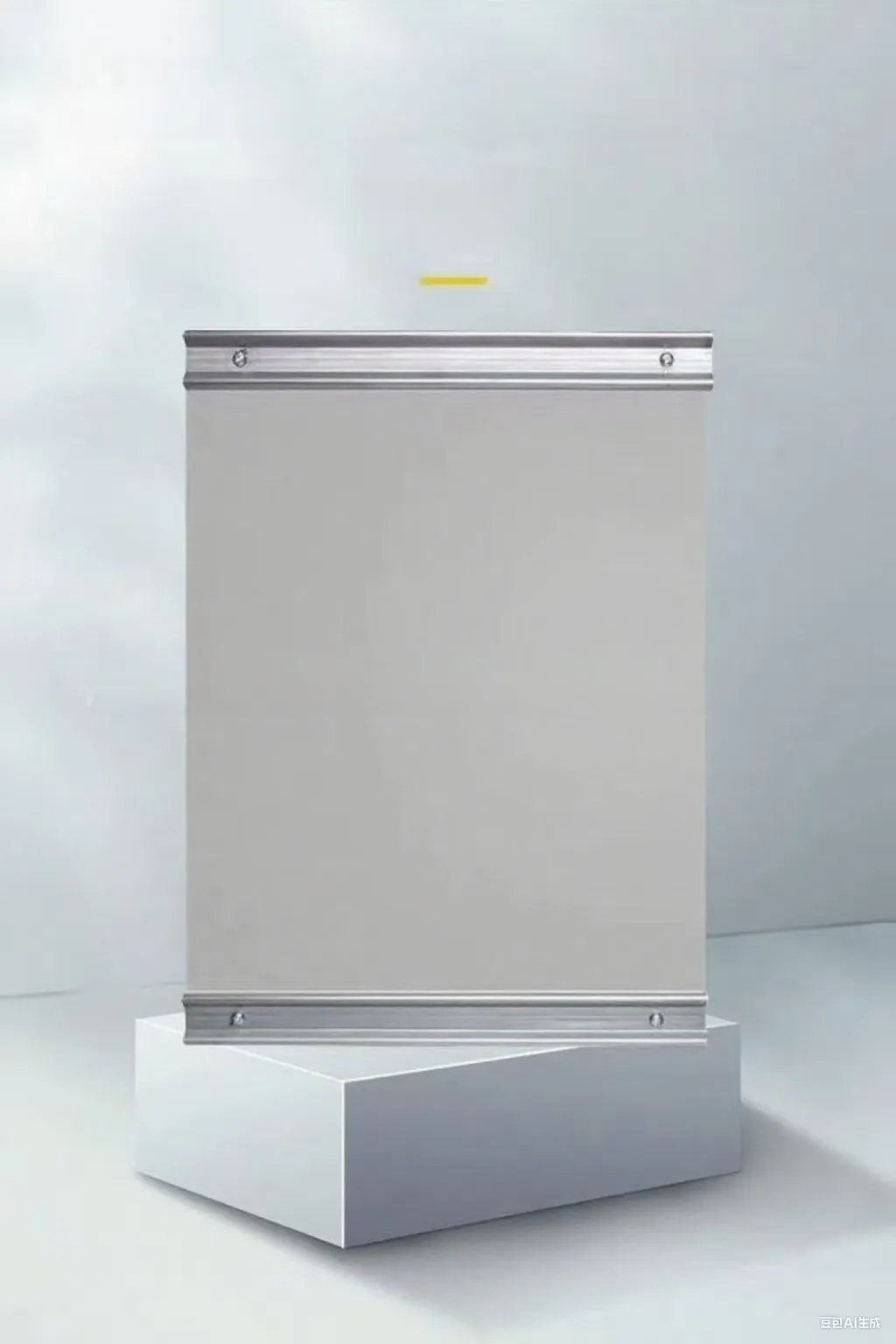
A fixed smoke curtain usually needs suitable mounting members, fabric panels and secure connections to the supporting structure. The installation is not necessarily simple on a large site, but it does not need a powered roller and deployment controls.
An automatic curtain adds a head box, roller, drive equipment, electrical connections and a control interface. The equipment needs headroom and access. That can create coordination issues with sprinkler pipes, ducts, lighting, cable trays and decorative ceilings.
For an automatic system, do not approve a quotation without checking a ceiling section. A plan view may show the correct location while hiding a beam directly above the proposed head box. A few centimeters of missing space can change the installation arrangement.
How the two options compare
|
Selection factor |
Fixed smoke curtain |
Automatic smoke curtain |
|
Normal condition |
Always installed in position |
Stored above opening; deploys on signal |
|
Ceiling space |
Mainly fixing and support space |
Head box, roller, drive and service access |
|
Electrical controls |
No deployment drive required |
Signal, power and control coordination |
|
Routine attention |
Fabric and fixing inspection |
Fabric plus drive, controls and deployment test |
|
Typical fit |
Where a permanent barrier is acceptable |
Where the opening must remain clear or open |
The controls deserve their own conversation
A fixed curtain is already in the intended position, so there is no deployment signal to coordinate. An automatic system must receive the correct command and follow the agreed movement sequence. Depending on project design, this may involve an alarm interface, control panel, power arrangement, fault indication and an emergency operating mode.
The smoke curtain supplier and the fire alarm contractor should agree on the interface before installation. Who provides the signal? Where is the controller installed? What happens after a test, and how is the curtain reset? Those questions are easier to answer on a drawing than during the final days before handover.
An automatic curtain does not always descend to the floor. The specified drop height may form only the upper boundary of a smoke reservoir. Both systems must follow the smoke-control design; choosing a convenient height from a catalogue is not a substitute for that design.
Maintenance is different, not optional
A fixed curtain has no deployment drive to test, but it still needs inspection. Fabric can be torn, mounting points loosened or the curtain obstructed by later construction. A permanent barrier that was suitable at handover can be compromised by a new sign, pipe or partition.
An automatic curtain needs visual inspection as well as functional testing. The roller, drive, control equipment, connections and actual descent should be checked under the project's applicable procedures. A curtain that stays hidden for months should not be assumed to work simply because its head box looks clean.
The relevant inspection frequency comes from local requirements, the building's maintenance plan and manufacturer instructions, rather than a universal timetable for every site.
The operating style is not a performance rating
It is also important not to confuse movement with tested smoke-control performance. The fact that one curtain is fixed and another is automatic does not, by itself, tell you the temperature classification, leakage characteristics or any other project-specific performance requirement. Those depend on the particular curtain system and its supporting evidence.
If the specification names a standard, test method or classification, request documents for the proposed configuration. Also check the installation conditions covered by those documents. A change in curtain size, mounting arrangement or control method may need technical review. This is a better basis for comparison than a generic catalogue claim that one type is always safer or stronger.
What about price?
A fixed system normally has fewer mechanical and electrical parts, so it may cost less to supply. An automatic system usually costs more initially and carries additional commissioning and maintenance responsibilities. But comparing only the unit price misses the point.
For example, a fixed barrier that conflicts with the architectural design could require a costly layout change. Conversely, specifying automatic curtains throughout an industrial roof where permanent barriers are acceptable may introduce unnecessary equipment. The right comparison is the total installed and maintained solution that meets the approved smoke-control requirement.
A sensible decision before requesting a quote
Ask three questions in order. First, what smoke-control boundary is required, and at what height? Second, can that barrier remain visible during ordinary use? Third, what structure, space and services are actually available where the curtain must be installed?
Once those answers are clear, the supplier can review the opening width, curtain drop, fixing condition, quantity and, for automatic systems, voltage and control requirements. Any project-specific test evidence or certification documentation should also be identified before finalizing the order.
Discuss your smoke curtain layout with HUADUN
HUADUN manufactures fixed and automatic smoke curtain systems for customized building openings. Share a plan and section drawing, required drop height, quantity and any control requirements. We can review the proposed arrangement and identify the technical points that need confirmation before production.
Custom Manufacturing, Project Support, and Global Export Experience
Maji Industrial Park, Jining Economic Development Zone, Shandong Province, China
Whatsapp : +8618853718958
Email : [email protected]


Copyright © 2026 by Shandong Jining Huadun Door Industry Co., Ltd. All Rights Reserved