A fire curtain may remain retracted for most of its working life.
Unlike an industrial door that operates many times every day, a fire curtain may stay inside its head box for long periods and only deploy during testing or an emergency.
This makes regular inspection especially important.
A system that appears normal from the outside may still develop problems in its curtain fabric, guide system, motor, controls or fire alarm interface.
Routine maintenance helps identify these issues before they affect operation.
This guide explains the main areas that should be checked during fire curtain inspection and maintenance.
Why Fire Curtain Maintenance Matters
A fire curtain is part of the building's fire protection system.
When activated, it must move from the stored position into its designed fire-protection position without obstruction or mechanical failure.
Problems may develop because of:
- dust and construction debris;
- damage to the curtain fabric;
- guide rail misalignment;
- electrical connection problems;
- changes to surrounding ceilings or building services;
- motor or control system faults;
- lack of regular testing.
These problems are not always obvious during normal building use.
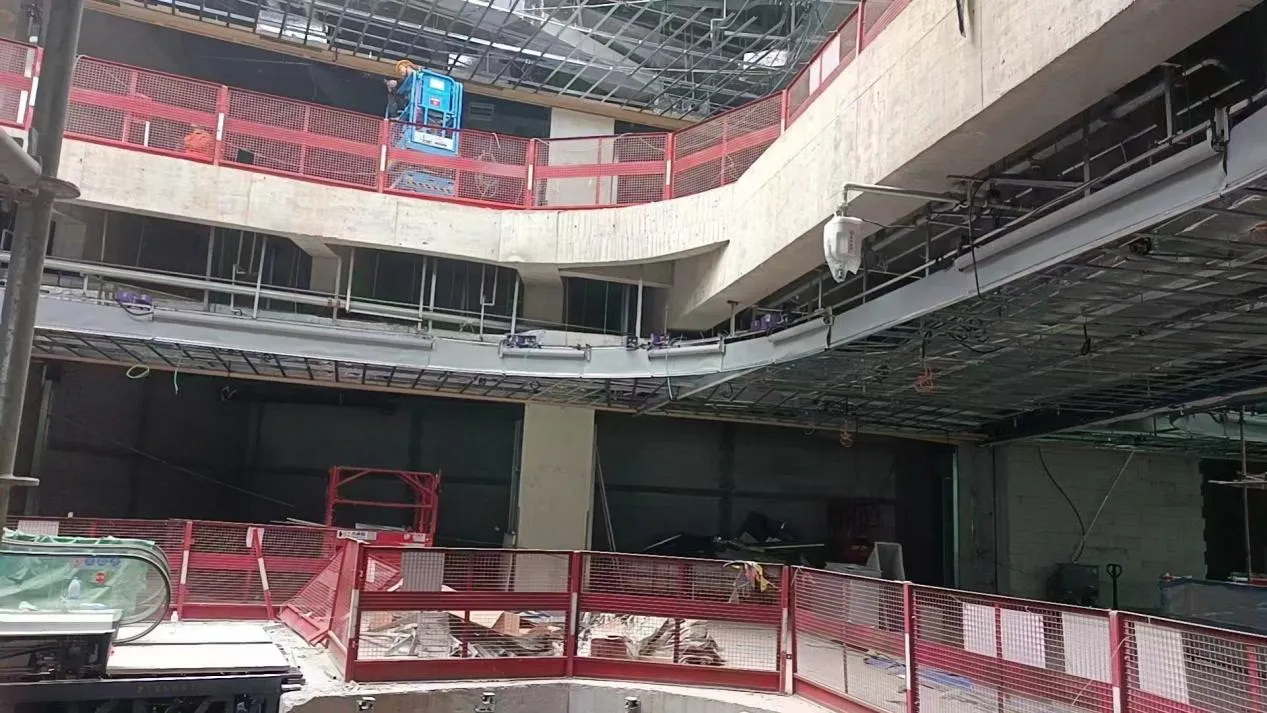
A fire curtain that has not been operated for a long time may therefore require inspection before its condition can be properly assessed.
1. Inspect the Curtain Fabric
The fire-resistant curtain is the main barrier of the system.
During inspection, check the visible curtain surface for:
- tears;
- cuts;
- punctures;
- excessive abrasion;
- loose seams;
- damaged edges;
- unusual deformation;
- contamination or foreign material.
Minor damage should not simply be ignored because the curtain may still appear capable of moving.
The effect of any damage depends on the curtain construction and the required fire performance.
If damage is discovered, the manufacturer or a qualified technician should determine whether repair or replacement is required.
It is also important to check whether the curtain has been altered after installation.
Drilling holes, attaching signs, fixing cables or adding other items directly to the curtain can affect its operation and should be avoided unless specifically approved.
2. Check the Side Guides
For vertical fire curtains, guide rails help control the curtain during deployment.
They should remain:
- securely fixed;
- correctly aligned;
- free from obstruction;
- undamaged;
- clear of excessive dirt or debris.
Foreign objects inside a guide rail can increase friction and interfere with curtain movement.
The surrounding wall or supporting structure should also be inspected.
Building movement, impact or later construction work can sometimes change the alignment of the guides after the original installation.
During a test cycle, observe both sides of the curtain.
The curtain should move evenly without catching, twisting or producing unusual resistance.
3. Inspect the Bottom Bar
The bottom bar helps maintain the lower edge of the curtain and supports controlled deployment.
Check for:
- visible impact damage;
- bending;
- loose connections;
- abnormal contact with the floor or surrounding structure;
- uneven positioning after deployment.
If the bottom bar is damaged or distorted, it can affect the way the curtain descends.
For large openings, even a relatively small alignment problem may become more noticeable across the full curtain width.
4. Check the Head Box and Roller Area
The upper part of the fire curtain system contains important mechanical components.
Depending on the system, this may include:
- roller shaft;
- bearings;
- motor;
- drive components;
- curtain storage area;
- fixing brackets.
Where inspection access is available, check for signs of:
- loose fixings;
- abnormal movement;
- corrosion;
- mechanical damage;
- unusual noise;
- accumulated debris.
The roller should remain correctly aligned.
If the curtain rolls unevenly onto the shaft, one side may begin to travel differently from the other.
This should be investigated rather than repeatedly operating the system in the same condition.
5. Test the Motor and Drive System
Automatic fire curtains rely on a motor or controlled drive system.
During maintenance, the system should be operated and observed throughout a complete cycle.
Pay attention to:
- smooth starting;
- stable movement;
- abnormal vibration;
- unusual motor noise;
- correct stopping position;
- normal reset or retraction.
The motor should not struggle noticeably during operation.
A change in operating sound or speed can indicate increased mechanical resistance or a developing drive problem.
Motor selection and operating logic vary between systems, so maintenance work should follow the technical information supplied for the specific project.
6. Inspect the Control Panel
The control panel is responsible for receiving signals and controlling fire curtain operation.
Maintenance should include a check of the control system for visible fault indications or abnormal status.
Depending on the system, technicians may check:
- power supply;
- control switches;
- indicator lights;
- wiring connections;
- relays;
- input and output signals;
- manual controls;
- fault messages.
Control panel settings should not be changed without understanding the original project sequence.
For systems connected to other fire-safety equipment, an incorrect control change can affect the way the curtain responds during an emergency.
7. Test Fire Alarm Integration
Many automatic fire curtains are connected to the building fire alarm system.
Testing only the motor from a local control button does not confirm that the complete emergency sequence is working.
Where applicable, maintenance should also verify the interface between:
Fire Alarm System → Fire Curtain Control Panel → Curtain Deployment
The test should confirm that the curtain receives the required activation signal and performs the intended sequence.
Depending on the project, this may include:
- automatic deployment;
- staged descent;
- emergency stopping position;
- reset operation;
- interaction with other building systems.
The exact sequence depends on the approved fire strategy and control design.
8. Check Backup Power and Emergency Functions
Some fire curtain systems include backup power or emergency operating functions.
Where these features are part of the project, they should also be tested.
A backup power system should not be considered functional simply because it is physically installed.
Its condition and ability to support the intended emergency operation should be verified according to the system design.
This can be particularly important in projects where loss of normal power forms part of the emergency operating sequence.
9. Keep the Deployment Area Clear
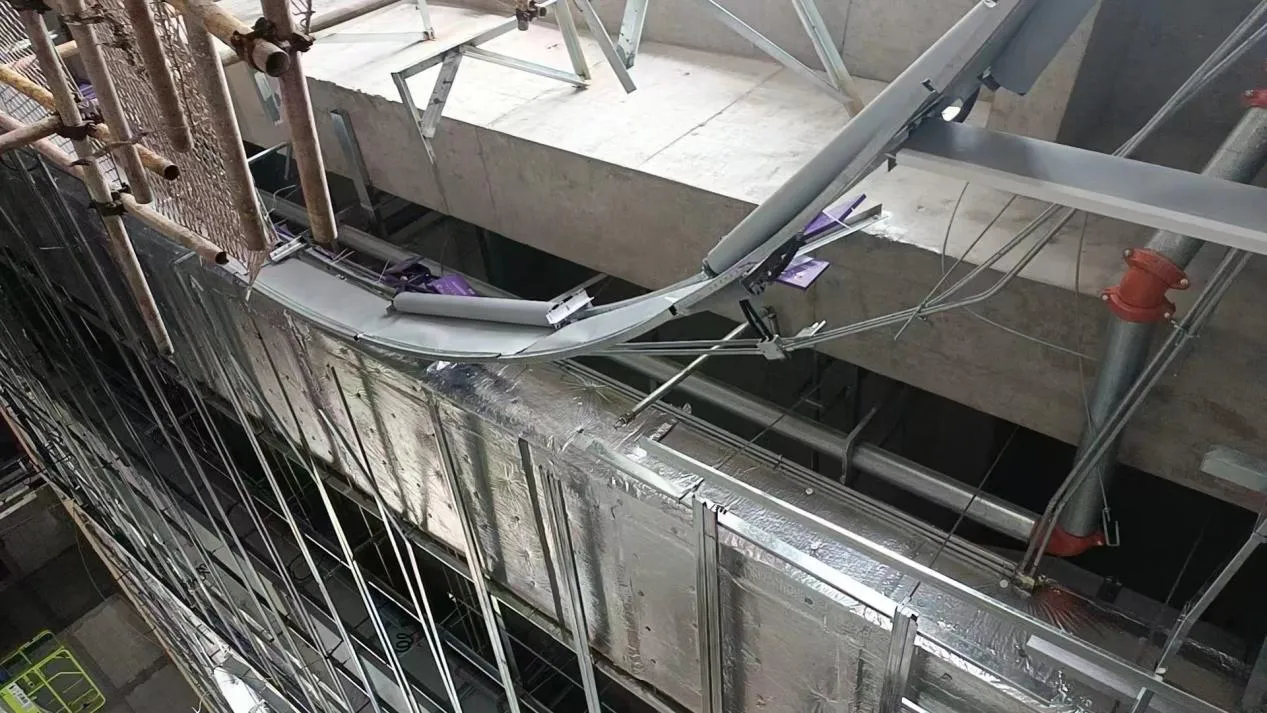
One of the simplest but most important inspections is checking the space directly below the curtain.
After a building has been in use for some time, new objects may appear in the deployment area.
Examples include:
- signs;
- furniture;
- display stands;
- temporary partitions;
- lighting;
- pipes or cables;
- decorative structures;
- storage materials.
A fire curtain needs a clear travel path.
The building operator should therefore ensure that the protected opening is not gradually obstructed after handover.
This is particularly relevant in shopping malls, exhibition spaces and commercial buildings where interior layouts may change frequently.
10. Look for Changes Around the Installation
Maintenance should not focus only on the fire curtain itself.
Changes to the surrounding building can also affect operation.
For example, later renovation work may introduce:
- a new suspended ceiling;
- additional ductwork;
- sprinkler pipes;
- cable trays;
- wall cladding;
- signage;
- structural modifications.
Even if these additions do not touch the curtain directly, they may reduce the required clearance.
After renovation or MEP work near a fire curtain, the system should be inspected again before the area is considered complete.
11. Perform a Full Deployment Test
A visual inspection alone is not enough.
The curtain should be operated so that the complete movement can be observed.
During deployment, check whether:
- both sides move consistently;
- the curtain remains within the guides;
- the bottom bar stays level;
- there is abnormal friction;
- movement is smooth;
- the final position is correct;
- the curtain can reset correctly.
For large systems, technicians should observe the curtain from more than one position.
This makes it easier to identify local problems along the opening that might not be visible from the control panel.
12. Record Inspection and Maintenance Work
Maintenance records are useful for both building operators and service technicians.
A basic record can include:
- inspection date;
- system location;
- curtain identification;
- test result;
- faults found;
- maintenance performed;
- components replaced;
- technician information;
- recommended follow-up work.
Keeping records makes it easier to identify recurring problems.
For example, if the same guide requires adjustment repeatedly, the cause may be related to the supporting structure rather than the guide itself.
Maintenance history is also useful when troubleshooting older systems.
How Often Should a Fire Curtain Be Inspected?
There is no single maintenance interval that should automatically be applied to every project.
Inspection and testing frequency can depend on:
- local regulations;
- applicable fire-safety requirements;
- manufacturer instructions;
- building type;
- system configuration;
- operating environment;
- project maintenance plan.
A fire curtain in a clean commercial building may operate under very different conditions from one installed in a dusty industrial facility.
The appropriate maintenance schedule should therefore follow the requirements applicable to the specific building and fire curtain system.
Common Warning Signs
A fire curtain should be checked if any of the following conditions appear:
- curtain movement becomes uneven;
- unusual noise develops;
- the curtain stops before reaching its intended position;
- the curtain rubs heavily against the guides;
- the motor appears overloaded;
- the curtain does not respond to the fire alarm signal;
- visible damage appears on the fabric;
- control panel fault indications remain active;
- the system cannot reset normally.
Repeatedly operating a system with an unresolved mechanical problem may cause further damage.
The cause should be identified before normal operation continues.
Maintenance After Construction or Renovation
New fire curtains can also require attention soon after installation.
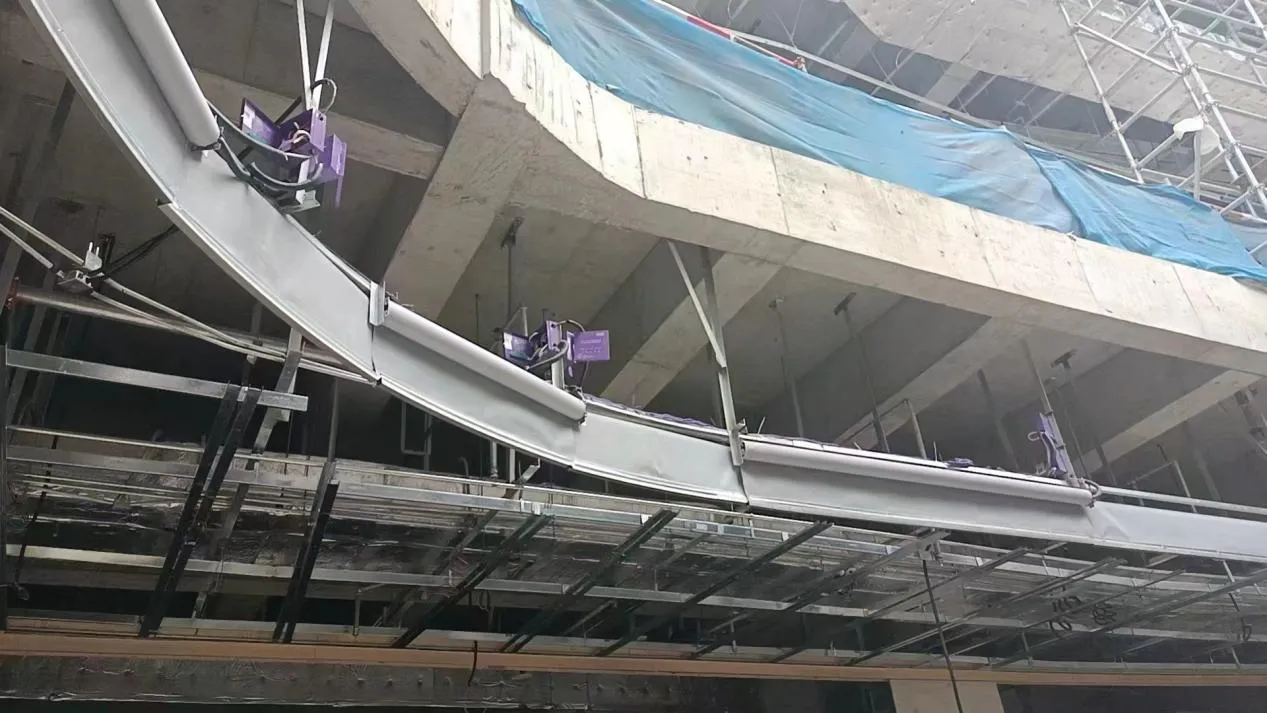
Construction projects often produce dust, debris and additional work around the ceiling.
Before final handover, it is useful to carry out another inspection after nearby construction activities are complete.
This is especially important where the fire curtain shares ceiling space with HVAC, electrical and fire-protection services.
A final deployment test can confirm that no later construction work has interfered with the system.
Fire Curtain Maintenance Support from HUADUN
HUADUN manufactures customized fire curtain systems for commercial and industrial building projects.
Depending on project requirements, technical support can include:
- product technical information;
- installation drawings;
- operation guidance;
- control system information;
- maintenance recommendations;
- troubleshooting support;
- remote technical assistance.
For systems supplied to overseas projects, photos, videos and operating information can also help our technical team understand an issue before replacement parts or further service are arranged.
Need Help With a Fire Curtain System?
If an existing fire curtain is showing abnormal operation, provide:
photos, videos, opening dimensions, system configuration and a description of the problem.
This information can help identify whether the issue is related to the curtain, guides, drive system, controls or installation conditions.
Custom Manufacturing, Project Support, and Global Export Experience
Maji Industrial Park, Jining Economic Development Zone, Shandong Province, China
Whatsapp : +8618853718958
Email : [email protected]


Copyright © 2026 by Shandong Jining Huadun Door Industry Co., Ltd. All Rights Reserved